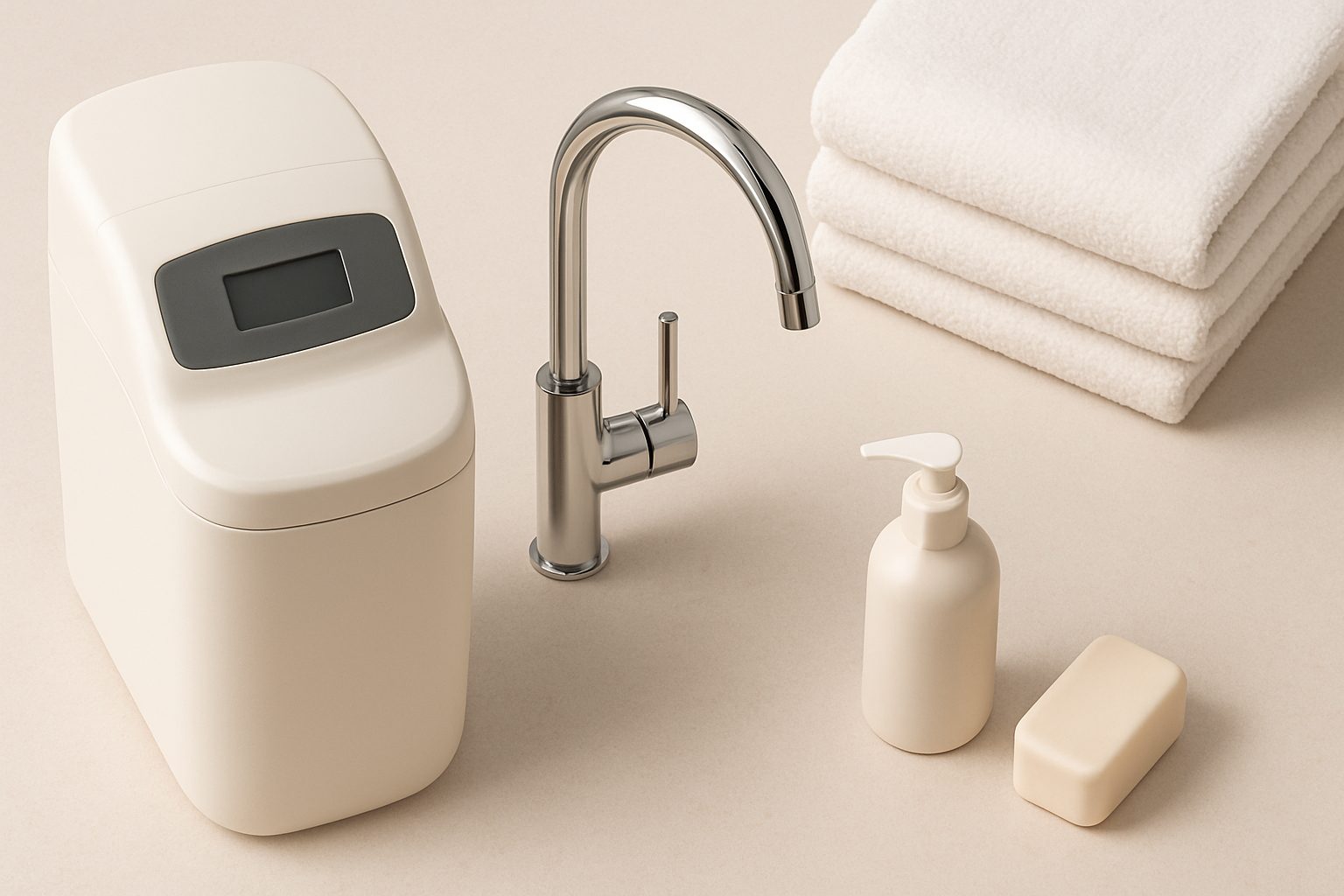
Water Softener Servicing & Maintenance UK: Costs, Schedules & Tips
Water softeners are surprisingly low-maintenance devices, but the word "surprisingly" is doing heavy lifting. Neglect yours and you'll end up with ineffective softening, higher salt consumption, and eventually expensive repairs. The good news is that keeping yours running well doesn't require specialist knowledge or constant attention.
What Needs Servicing?
Your softener has two main moving parts: the resin bed (which actually softens the water) and the control valve (which manages the regeneration cycle). The resin gradually becomes less effective over time as it accumulates iron and minerals that a standard salt rinse can't remove. The control valve, meanwhile, just needs to stay clean and properly configured—it rarely fails if you're using the right salt and maintaining water pressure.
Most manufacturers recommend a professional service every 12 months, though some quality units will run three years between services if your water is relatively clean. If your incoming water has high iron content, you might need annual cleaning of the resin.
Annual Service Costs
A professional water softener service in the UK typically costs £150 to £300, depending on your location and the engineer's callout charge. What you get for this includes:
- Complete system inspection and testing
- Resin bed cleaning (essential if you have iron in your water)
- Control valve inspection and any necessary adjustments
- Salt system check and brine tank cleaning
- Pressure testing and flow rate verification
Some engineers charge a fixed rate; others charge call-out fees plus labour. If you're out of warranty, always get a quote first. For Kinetico units (which don't use electricity or timers), annual servicing is often more expensive—expect £200 to £400—because the work is more technical.
London and the South East tend to be pricier than the Midlands or North. Remote areas sometimes attract premium charges.
DIY Maintenance You Can Do
You don't need an engineer for basic upkeep. Monthly or quarterly checks will catch problems early and keep costs down.
Check the salt level. Simply look in the brine tank. It should be roughly half full. If you're emptying it every month, your softener is working harder than it should—possibly because your water's hardness level isn't set correctly, or you have a valve leak. If it's barely dropping over several months, the system isn't regenerating properly, which often means a control valve issue.
Inspect the brine tank. Open the lid and look for salt bridges (a hard crust that forms over the salt, leaving a hollow underneath). If the salt isn't dissolving into brine, your softener can't regenerate. Break the bridge up with a broom handle. If you see a lot of sludge (undissolved salt residue), your salt quality is poor or your tank needs cleaning.
Use the right salt. Cheap rock salt leaves more sludge and clogs your system faster. Tablet salt (also called pillow salt or evaporated salt) is far better for domestic units. It's more expensive per bag but you'll use less and your resin lasts longer. Some regions stock block salt, which sits somewhere between in terms of performance.
Annual resin cleaning. If your water has iron, you can clean the resin yourself using a commercial resin cleaner. This isn't hard, though it's messy. The resin bed sits inside the pressure tank, accessible through a small port at the top. You'll introduce the cleaning solution through the brine injector, run a few regeneration cycles, and flush thoroughly. Kits cost £20 to £40. Do this if your system starts softening water less effectively, even though salt levels are fine and the control valve looks healthy.
Monitor water pressure. Your softener should have a bypass valve and pressure gauges (or at least one). Mains pressure should be 2.5 to 3.5 bar. If it's dropping or fluctuating, you might have a blocked resin bed or faulty valve.
When to Call an Engineer
Don't wait for problems. Call an engineer if:
- Softened water is hard again, despite adequate salt and correct settings
- The control display shows error codes
- Water pressure has dropped significantly
- Brine tank is overflowing or leaking
- The system is running regeneration cycles more frequently than it should
Catching these early costs £150–£300 now. Ignoring them costs £800–£1,500 in replacement parts or a full new unit later.
Preventative Measures That Actually Work
The single best thing you can do is use quality salt and monitor the brine tank monthly. It takes three minutes. A water filter before your softener (a sediment filter for particles and chlorine removal) extends the life of both the resin and valve considerably, especially if your mains water quality is variable.
Keep the system protected from freezing if it's installed in an unheated space. Burst tanks and cracked valves are expensive. Wrap pipes and consider moving the unit if winter temperatures regularly drop below 5°C.
When to Replace, Not Repair
If your softener is over 15 years old and needs a control valve replacement, the engineer will probably suggest a new unit. New valves cost £300–£600 in parts and labour, whereas a modern softener might be £500–£1,000. Newer units are also more efficient with salt, which compounds savings over time.
If the resin bed is permanently damaged (cracked or disintegrated), you're looking at a full replacement, not just a clean. Again, this might not be economical on an older system.
The Bottom Line
Budget for £150–£300 annually for professional servicing, or £50–£100 if you're confident doing basic maintenance yourself and calling an engineer every other year. Keep quality salt in stock (cost: pennies per month) and check your brine tank regularly. This simple discipline keeps your water genuinely soft and your bills genuinely low.
More options
- Amazon UK — Salt-Based Water Softeners (Amazon UK)
- Amazon UK — Salt-Free & Magnetic Water Conditioners (Amazon UK)
- Amazon UK — Water Softener Salt Blocks & Tablets (Amazon UK)
- Amazon UK — Water Hardness Test Kits (Amazon UK)
- Harvey Water Softeners & BWT UK — Brand Affiliate (Amazon UK)