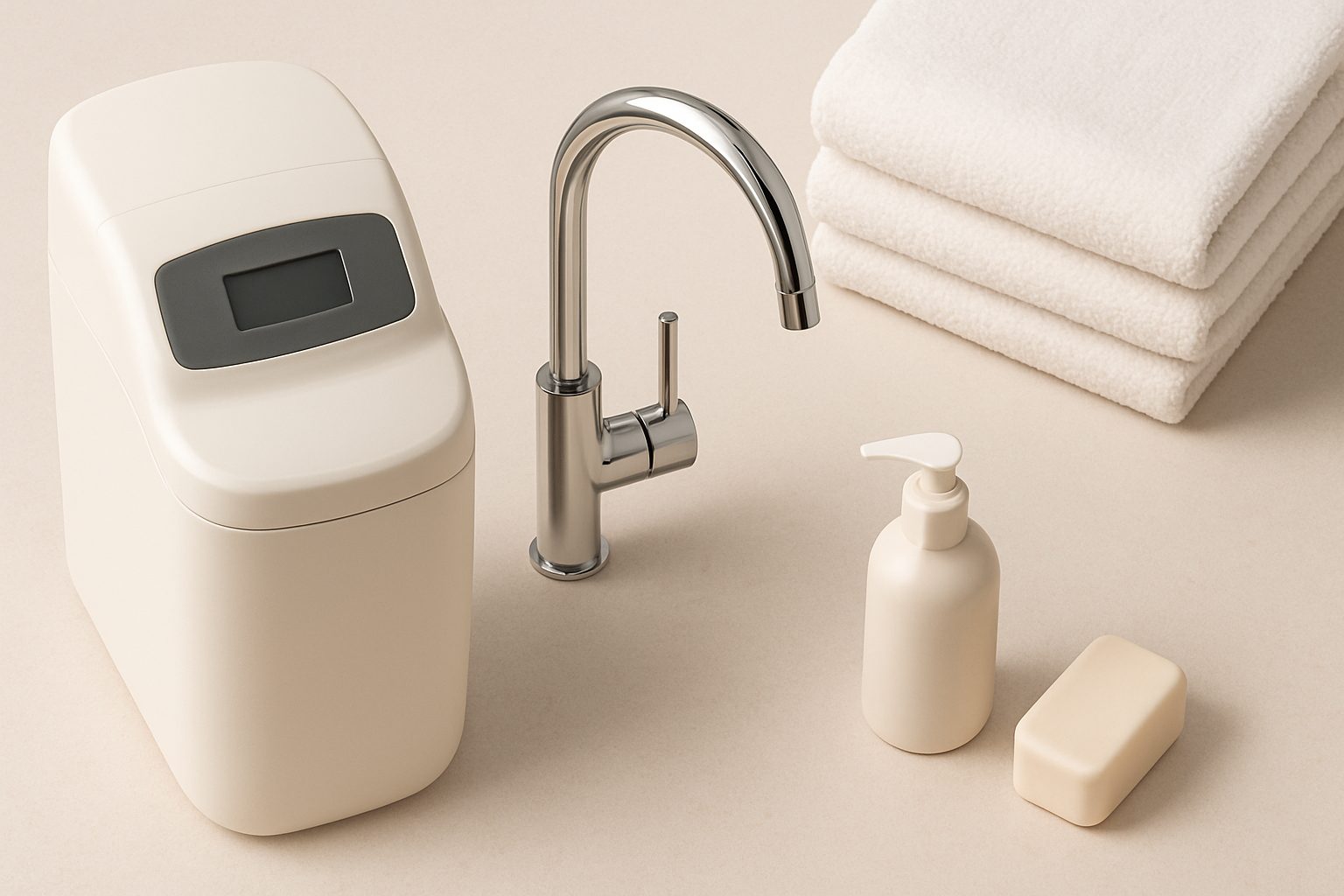
Best Water Softeners with a Separate Drinking Water Tap UK
If hard water is damaging your pipes and household appliances, a water softener is a practical investment. But if you're concerned about sodium content in softened water, installing a separate tap for unsoftened drinking water gives you the best of both worlds. This guide explains how these systems work, what to expect, and how to choose one that fits your home.
Why You Need a Separate Drinking Water Tap
Water softeners remove hardness minerals (calcium and magnesium) by replacing them with sodium ions in an ion-exchange process. For most household uses—washing clothes, showering, cleaning—softened water is superior. But for drinking and cooking, many people prefer to avoid the extra sodium, particularly those on sodium-restricted diets or with young children.
A separate drinking water tap lets you enjoy soft water throughout your home whilst keeping your kitchen tap on hard water supply. The sodium content added during softening is modest (typically 100–200 mg/litre depending on water hardness), but it adds up if you're drinking multiple glasses daily. By bypassing the softener at your drinking water point, you get the mineral content you expect and avoid unnecessary sodium intake.
Types of Systems with Separate Taps
Dual-outlet under-sink softeners are the most common solution. These compact units sit beneath your kitchen sink and deliver softened water to one tap and unsoftened water to a separate dedicated tap. They use cartridge filters rather than traditional resin tanks, making them smaller and easier to maintain. Most UK models require annual cartridge replacement, costing £30–60.
Whole-house softeners with bypass taps offer an alternative if you want to soften all your home's water but still have an unsoftened outlet. A bypass valve fitted to your main softener allows you to divert water around the softening media. You'll need a plumber to install a separate pipe and tap, typically at the kitchen sink, but this approach works well if you're already planning a whole-house system.
Combination softener-and-filter units integrate a softener with a separate filter cartridge for the drinking tap. The filter handles chlorine, sediment, and some contaminants, giving you better-tasting drinking water alongside the convenience of a soft-water home. These are popular in hard-water areas like the Midlands and South East.
Key Considerations Before Buying
Water hardness level matters. The softer your incoming water, the less sodium gets added during softening. Hard water areas (above 300 mg/litre) benefit more from softening than moderately hard areas. Check your water provider's hardness data online—it's free and specific to your postcode.
Installation and space. Under-sink units are compact and easier to fit yourself if you're handy with plumbing, though a plumber typically charges £150–300 for professional installation. Whole-house systems require more work, especially if you're digging up pipework in a solid-floor property.
Maintenance. Cartridge-based systems are simpler than resin-tank softeners. You simply slot in a new cartridge annually—no salt bags, no regeneration cycles, no discharge water to manage. Budget around £40–60 per year.
Water usage. Smaller units suit light to moderate usage. If you have a large family or run water-intensive appliances regularly, a traditional whole-house softener may be more cost-effective over time, even if you add a bypass tap.
Rental and temporary solutions. If you rent or aren't sure about long-term commitment, under-sink softeners are easily removable. Some landlords require written consent before water treatment installation, so check your tenancy agreement.
How These Systems Are Installed
Most under-sink models connect to the cold-water supply pipe below your sink. You'll need the existing cold tap, a new softened-water tap for other uses, and a separate unsoftened tap for drinking. A plumber typically runs new pipework behind the sink or along the wall, creating three distinct outlets.
Whole-house softeners usually sit in a utility room or garage, with the incoming mains supply diverted through the softening tank before splitting to serve all taps. Installing a bypass for drinking water means adding another tap at the kitchen sink, fed directly from the unsoftened bypass line.
Most installations take 2–4 hours. Quality matters—poor pipework can lead to leaks, frozen pipes in winter, or kinked hoses that reduce water pressure. Using a Water Regulations Compliance approved installer (check the Building Control register) ensures your system meets UK standards.
Installation Costs and Running Costs
Professional installation ranges from £150 for a simple under-sink unit to £400–600 for a whole-house softener with bypass tap. Annual cartridge replacements cost £40–60, or slightly more if you choose premium filter media for better taste or contamination removal.
Running costs are minimal—most systems use negligible electricity, and water discharge is only relevant for resin-tank models that need periodic regeneration.
Final Thoughts
A water softener with a separate drinking water tap removes the awkward trade-off between soft water and sodium intake. For UK households with hard water, the convenience of soft water for washing and cleaning—reduced limescale, softer skin, longer appliance life—often justifies the modest £500–1500 upfront cost and simple annual maintenance.
If you're on a tight budget or live in a mildly hard area, you might start with a cartridge-based under-sink unit feeding just your kitchen. If your water is very hard and you want whole-house softness, a traditional softener with a bypass tap is still the more robust choice, despite higher upfront investment.
Choose a system matched to your water hardness, space constraints, and household size, and your water will be softer where it counts—and safer to drink where it matters.
More options
- Amazon UK — Salt-Based Water Softeners (Amazon UK)
- Amazon UK — Salt-Free & Magnetic Water Conditioners (Amazon UK)
- Amazon UK — Water Softener Salt Blocks & Tablets (Amazon UK)
- Amazon UK — Water Hardness Test Kits (Amazon UK)
- Harvey Water Softeners & BWT UK — Brand Affiliate (Amazon UK)