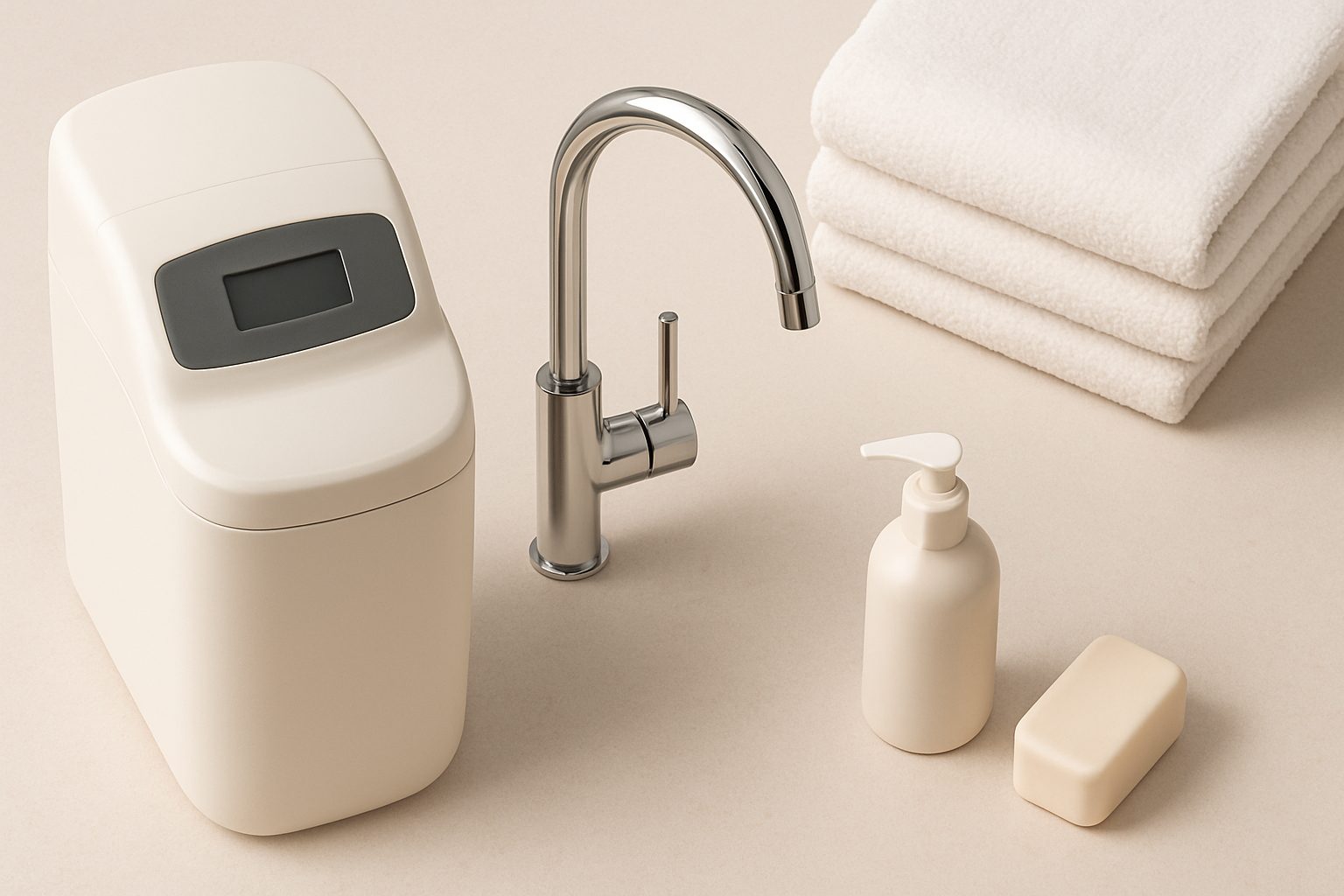
Cheapest Water Softeners UK — Budget Picks Under £500
Hard water affects around 60% of UK properties, leaving limescale on taps, reducing appliance lifespan, and making soap less effective. If you've been putting off softening your water because prices seemed steep, sub-£500 options do exist—but they come with real trade-offs worth understanding before you buy.
What You're Compromising On
Budget water softeners aren't cheap because manufacturers cut costs on the resin; they're cheap because they skip the intelligence. Premium units have demand-initiated control (metering exactly how much water you've used) and can cost £1,500–£3,000. Budget models under £500 use fixed regeneration schedules—typically timer-based systems that rebuild the resin bed on the same day every week, regardless of how much water your household actually consumed.
This matters. If a budget softener's programmed to regenerate every Thursday, it'll do so even if you've only used half your water allowance. You'll waste salt and water. Over a year, those wasted regenerations can genuinely offset the savings you made buying a cheaper unit in the first place.
That said, for a smaller household (one or two people) or as a temporary solution while you save for something better, budget timer-based systems work perfectly adequately.
Timer-Based versus Demand-Initiated
Timer-based systems cycle on a fixed schedule. You set them to regenerate, say, weekly or fortnightly. They're mechanically simple—fewer electronics means fewer things to fail. The resin itself lasts 15–20 years in both budget and premium models; resin isn't where budget corners are cut. What differs is the control valve housing and the intelligence behind it.
Demand-initiated systems measure water flow through a meter, calculate hardness removal, and only regenerate when the resin actually needs it. A family using 80% of their softener's capacity in a week regenerates once; a family using 40% doesn't. Over time, this precision saves 30–50% on salt and water consumption compared to a timer system running on a fixed schedule.
For a household genuinely interested in minimising running costs, a demand system pays for itself within five to eight years through salt savings alone. For a budget-conscious buyer unable to stretch to £600–£700, a timer system is a practical compromise—just accept you're losing efficiency in exchange for lower upfront cost.
Budget-Friendly Options Under £500
Monarch and own-brand timer units dominate the sub-£400 market on Amazon UK. These are functionally identical to many own-label softeners sold by larger retailers; the valve housing and resin tank come from the same manufacturers, just rebranded. Expect to pay £250–£380 for a cabinet-style unit handling 20–25 litres per minute, sufficient for a typical four-bedroom house.
Key specs to check:
- Flow rate: Look for at least 20 litres per minute. Below that, you'll notice reduced shower pressure during heavy usage.
- Hardness reduction: Budget units typically handle water with hardness up to 400 ppm (parts per million). UK mains hardness typically ranges 100–250 ppm, so this is adequate for most regions.
- Salt capacity: Larger tanks (e.g., 25 kg) mean less frequent refilling. Budget models often spec smaller tanks to reduce size; you might refill fortnightly instead of monthly.
- Warranty: Three years is standard. Anything less suggests the manufacturer lacks confidence.
Don't assume "cheapest" equals "failing within a year." A well-maintained timer-based softener from a recognized supplier typically runs trouble-free for 10+ years. The resin does the actual work, and resin quality is consistent across price points.
Installation and Running Costs
Budget softeners are no more difficult to install than premium ones. You need bypass plumbing, a drain connection, and mains electricity. A plumber will charge £300–£500 for fitting. Some retailers offer installation packages; compare the total (unit + labour + pipework) rather than the unit price alone.
Running costs centre on salt (£8–£15 per 25 kg bag, depending on region and supplier). A budget timer system in an average hard-water area consumes roughly 15–20 bags annually. That's £120–£300 per year. A demand system in the same household might use 10–13 bags, saving £60–£100 annually. Do the maths for your household size and local water hardness (your water company publishes this).
Electricity consumption is minimal—typically £5–£15 per year for a timer system.
When a Budget Softener Makes Sense
A budget timer-based softener is a sensible choice if:
- You're a smaller household (one or two occupants) where wasted regenerations are genuinely minimal.
- Your water hardness is moderate (under 250 ppm) rather than extreme.
- You're renting and can't justify a premium system you'll leave behind.
- You're testing whether softening solves your limescale problem before committing more money.
- You're prepared to replace it with a demand system in five to eight years when finances allow.
A budget softener is not the right choice if you have a large family, very hard water (above 300 ppm), or you plan to stay in your home for 15+ years. The cumulative salt waste makes a premium demand-initiated system the better investment over that timeframe.
The Practical Reality
A £300 timer-based softener that runs for ten years and costs £1,500–£2,000 in salt and electricity is genuinely economical for the right household. You're not buying an inferior product; you're accepting a less efficient control system. Limescale will still vanish from your kettle and taps. Your appliances will still last longer. Your soap will still lather better.
Just enter the purchase knowing you're trading convenience and efficiency for upfront affordability—and whether that trade-off suits your circumstances.
More options
- Amazon UK — Salt-Based Water Softeners (Amazon UK)
- Amazon UK — Salt-Free & Magnetic Water Conditioners (Amazon UK)
- Amazon UK — Water Softener Salt Blocks & Tablets (Amazon UK)
- Amazon UK — Water Hardness Test Kits (Amazon UK)
- Harvey Water Softeners & BWT UK — Brand Affiliate (Amazon UK)